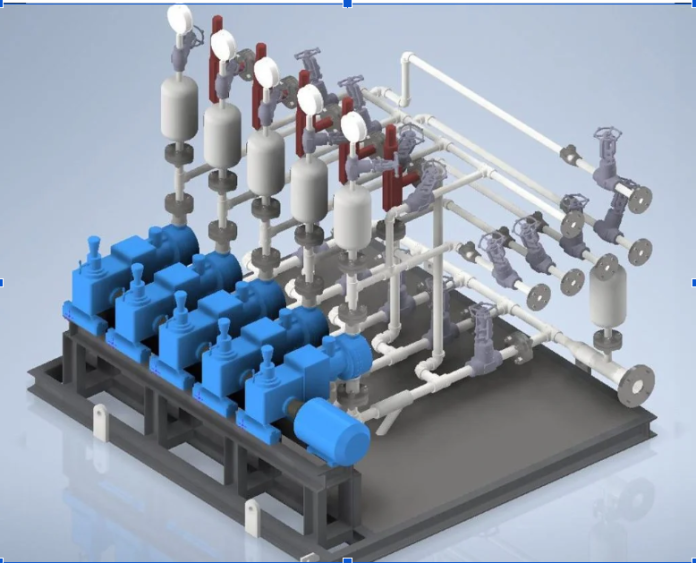

Accurate chemical dosing is essential in process plants, where small variations can affect treatment performance, product quality and operating costs. Dosing equipment must deliver consistent volumes despite changes in pressure, temperature, viscosity and operating conditions. Reliable performance depends on more than pump selection, with calibration, installation, fluid properties, control systems and maintenance also playing important roles in maintaining accurate chemical delivery.
Understanding Chemical Dosing Accuracy
A chemical dosing pump is designed to deliver controlled quantities of a liquid into a process stream. Accuracy refers to how closely the actual delivered quantity matches the intended dosing rate.
What Accuracy Means in Practice
Pump accuracy can be affected by both repeatability and capacity variation. A pump may consistently deliver similar quantities while still operating above or below the intended set point. Process conditions can also change the actual output. Back pressure, suction conditions, fluid viscosity and chemical temperature may all influence the amount delivered during each operating cycle.
Why Consistent Dosing Matters
In water treatment, chemical processing, oil and gas operations and manufacturing plants, dosing rates are often linked directly to process conditions. Excessive dosing can increase chemical consumption, while insufficient dosing may prevent the process from achieving the required result.
For this reason, accuracy needs to be evaluated under actual operating conditions rather than only under controlled factory testing conditions.
Pump Selection and Sizing
Choosing the right pump size and type helps maintain reliable chemical dosing.
Matching Capacity to Demand
- Establish minimum, normal and maximum dosing rates before selection.
- Avoid significantly oversized pumps, particularly where very low flow is required.
- Consider discharge pressure, as pressure changes can affect actual flow.
Considering Pump Type
Different pumping technologies offer different approaches to flow control. A dosing pump may use mechanical adjustment, stroke control, speed control or electronic control depending on its design. An electric double diaphragm pump can also be considered for applications where controlled diaphragm-based fluid transfer is required, depending on the process duty and dosing requirements.
Fluid Properties Affect Output
The liquid being dosed can have a direct influence on pumping performance. Chemicals with different viscosities, densities and compositions behave differently during suction and discharge.
Viscosity and Temperature
Highly viscous chemicals may require different suction arrangements or operating speeds compared with low-viscosity liquids. Temperature changes can also alter viscosity and therefore affect pump behaviour. Where a chemical becomes significantly more viscous at lower temperatures, the dosing system should be evaluated under those conditions rather than relying only on room-temperature properties.
Chemical Concentration
Chemical concentration can influence density, viscosity and compatibility with wetted components. These changes may affect the actual delivered volume and the long-term condition of pump parts. Accurate process data should therefore include the concentration range expected during normal operation.
Suction Conditions and Installation
The suction side of the dosing system can significantly influence accuracy. A pump cannot deliver consistent quantities if the liquid supply to the pump is unstable.
Suction Line Design
The suction pipe should be appropriately sized and kept as simple as practical. Excessive length, unnecessary fittings and restrictions can increase resistance and affect pump filling. The storage tank position and liquid level should also be considered. Changes in suction head can alter operating conditions, particularly when the tank level varies significantly.
Air and Gas Management
Some chemicals can release gas or contain entrained air. Gas accumulation in the pump head can interfere with accurate liquid displacement. Suitable arrangements such as proper venting, appropriate valves or degassing provisions may be necessary depending on the chemical and application.
Discharge Pressure, Calibration and Control
Discharge pressure and calibration both influence chemical dosing accuracy. Stable pressure helps maintain predictable flow, while pressure fluctuations may require suitable back-pressure devices, relief arrangements or control measures.
Preventing Uncontrolled Flow
Pressure differences can cause unwanted chemical movement, leading to overdosing or inconsistent delivery. The discharge system should therefore be designed for controlled flow.
Calibration and Control
- Verify actual delivery at minimum, normal and higher dosing rates.
- Repeat calibration periodically to account for wear and process changes.
- Flow meters, pH sensors and conductivity instruments can support automated dosing.
- Manual control may suit stable processes, while variable applications may benefit from automatic control.
Chemical Dosing Skid Design
A chemical dosing skid combines several components required for controlled chemical injection into a packaged arrangement. Depending on the application, this may include pumps, tanks, valves, instruments, piping and control equipment.
Integrated Equipment Selection
A properly designed skid considers how each component affects the dosing process. Pump capacity, pipe dimensions, pressure control, instrumentation and chemical compatibility should be evaluated together. Where diaphragm-based pumping is suitable, an electric double diaphragm pump may form part of the equipment arrangement based on the required flow, pressure and fluid characteristics.
Safety and Maintenance
The skid should also provide practical access to valves, instruments and pump components. Appropriate containment and isolation arrangements may be required where hazardous or corrosive chemicals are involved. Maintenance access should be considered during design so that routine inspection does not require extensive plant disruption.
Maintenance and Long-Term Accuracy
Even a correctly sized dosing system can lose accuracy if components deteriorate or operating conditions change. Diaphragms, valves, seals and other wetted components should be inspected according to the severity of the application. Chemical deposits, wear and material degradation can affect the pump’s ability to deliver consistent quantities. Keeping suction and discharge systems free from blockages is equally important. Changes in line resistance can alter pressure conditions and affect delivery. A planned maintenance programme combined with periodic calibration provides a stronger basis for maintaining dosing performance over time.
Conclusion
Chemical dosing accuracy depends on more than the rated performance of the pump. Correct sizing, fluid properties, suction conditions, discharge pressure, calibration, control systems and maintenance all contribute to reliable chemical delivery. A properly engineered system should be designed around actual process requirements and expected operating variations. Integrating pumps, piping, instruments and safety components can further improve consistency and simplify operation. For industrial plants requiring dependable chemical handling and dosing arrangements, NND OIL & GAS provides application-focused engineering and equipment solutions designed around specific process requirements.