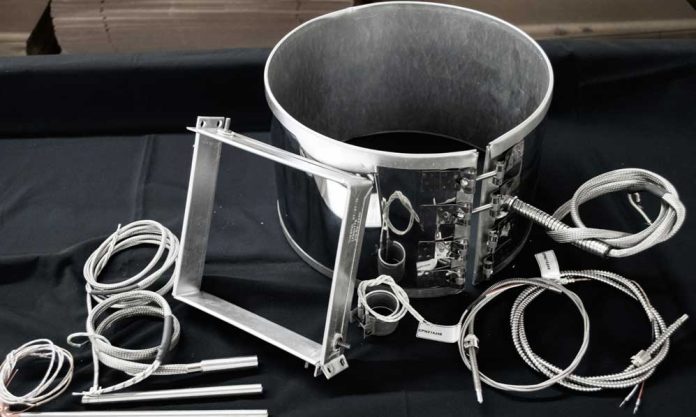

Choosing the right heater for industrial applications often comes down to wattage. That single factor plays a big role in determining not only performance but also how much an operator will spend upfront and over time. With mica band heaters, the wattage range directly influences pricing, durability, and operating costs, making it one of the most important considerations for buyers comparing options.
Low Wattage Options That Reduce Initial Investment
Lower wattage mica band heaters are often selected for processes that require gentle, steady heating without pushing large amounts of energy. These designs are typically used in smaller machinery or light-duty applications, such as warming drums or maintaining modest temperatures in extrusion systems. Because their energy draw is limited, the mica band heater price for low wattage units tends to be more affordable, making them attractive to facilities watching their budgets.
Another advantage of low wattage models is their longer operational life when used correctly. Since they generate less intense heat, they place less stress on the mica insulation and metal sheath, reducing wear over time. This makes them a cost-effective solution for buyers who prioritize longevity and energy savings over high output. For manufacturers who don’t require heavy-duty heating, this range balances efficiency with affordability.
Mid Range Wattage Choices Balancing Cost and Performance
Mid-range wattage mica band heaters strike a balance between initial price and functional versatility. They are often the go-to option for industries that require dependable heating at moderate levels, such as plastics manufacturing or packaging operations. The mica band heater price in this category sits between entry-level units and industrial-grade models, offering a middle ground that serves both performance and budget needs.
These heaters are well-suited for applications that involve continuous use, where maintaining consistent temperatures is more important than reaching peak output quickly. Their wattage allows them to distribute heat evenly without overloading circuits or increasing maintenance costs significantly. For companies seeking both reliability and adaptability, mid-range wattage mica band heaters provide the right combination of cost and capability.
High Wattage Units Driving Premium Pricing in Industrial Use
High wattage mica band heaters are engineered for demanding industrial applications. These units can handle large processing equipment, thick-walled cylinders, or high-speed production environments where rapid heating is required. Because they deliver such powerful performance, the mica band heater price for high wattage models is naturally higher, reflecting both material strength and engineering precision.
These heaters often include reinforced insulation and heavy-duty terminals to manage the extreme energy flow. The higher investment makes sense for manufacturers who depend on quick heat transfer and minimal downtime. While the upfront cost is greater, the ability to support intense workloads often outweighs the expense, making high wattage mica band heaters indispensable for large-scale operations.
How Watt Density Affects Mica Band Heater Durability
Watt density, or the amount of power per square inch of heater surface, is another factor that impacts both pricing and lifespan. Lower watt densities reduce stress on the mica band, meaning the heater can run for longer periods without damage. Higher watt densities, however, increase wear and tear, often raising the mica band heater price due to reinforced construction and materials required to handle the stress.
Durability is particularly important in industries where heaters are expected to run continuously under tough conditions. By selecting the correct watt density, operators can extend the life of their mica band heaters and reduce replacement costs. This balance is key—choosing too high a watt density may shorten heater life, while too low a density could underperform in heavy-duty tasks.
Price Differences Tied to Small Versus Large Diameter Wattage Needs
The size of the heater also plays a role in cost, especially when factoring wattage requirements. Smaller diameter mica band heaters often use lower wattages, which makes them less expensive upfront. Their reduced material usage and simpler construction contribute to a lower mica band heater price, making them ideal for compact systems or lighter workloads.
Larger diameter heaters, however, require higher wattages to maintain consistent heating across a greater surface area. This increase in wattage capacity leads to a jump in both material costs and engineering complexity. Buyers should expect a higher price tag with larger heaters, especially those intended for industrial machinery where precision heating is critical.
Why Higher Wattage Demands Increase Energy Consumption Costs
The impact of wattage doesn’t stop at purchase—it also affects energy costs throughout the heater’s life. Higher wattage mica band heaters consume more electricity, leading to increased operational expenses. While they may deliver the power needed for industrial tasks, facilities must account for these long-term energy costs when considering the total investment.
On the other hand, lower wattage heaters consume less energy and therefore provide savings over time, though at the expense of peak performance. Striking the right balance between wattage and energy consumption helps control both initial mica band heater price and ongoing utility bills. Understanding this trade-off is essential for long-term budgeting in manufacturing environments.
Wattage Thresholds That Determine Custom Build Requirements
Standard mica band heaters cover a wide range of applications, but higher wattage thresholds often push manufacturers into custom builds. Once requirements exceed typical production limits, heaters must be designed with specialized insulation, custom clamping systems, or unique electrical fittings. These design modifications significantly increase mica band heater price because of the engineering and testing involved.
Custom builds offer the advantage of precision—ensuring the heater performs exactly as needed in unique applications. However, they also carry longer lead times and higher upfront costs. For operations with highly specific heating demands, these custom wattage thresholds are a necessary investment to achieve consistent, safe, and efficient performance.