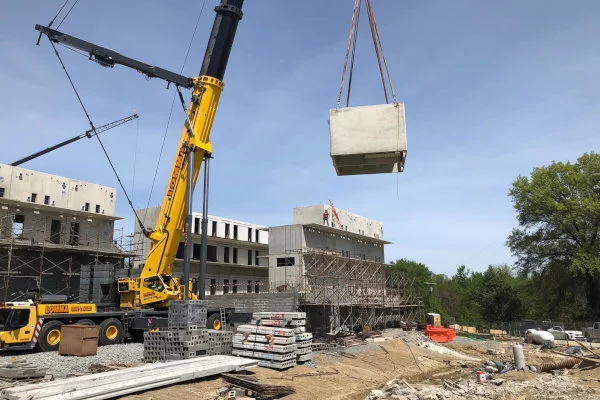

Picture a facility that’s up and running in less than half the time of a traditional build—and built with tighter precision. Modular jails aren’t just efficient; they’re changing how detention is done. They’re the product of forward-thinking detention equipment contractors who bring innovation, speed, and reliability into one seamless solution.
Manufactured On‑Site Modular Cells Slashing Build Time by Half
One of the biggest advantages modular jails offer is speed. By manufacturing the modular cells directly on-site or nearby, detention equipment contractors can cut the construction timeline dramatically. That means a secure, operational facility can be delivered in months rather than years. Instead of coordinating multiple trades over long schedules, the modular cells arrive ready to install with walls, hardware, and finishes intact.
This method reduces the risks tied to weather delays, subcontractor gaps, and inconsistent field labor. For project owners and decision-makers, that time savings translates into cost control, earlier occupancy, and fewer headaches. It’s an approach that fits modern demand for faster, more dependable correctional construction without sacrificing safety or performance.
Monolithic Precast Concrete Units Delivering Superior Structural Resilience
Modular jails use monolithic precast concrete units that are poured in a controlled environment and cured with uniform precision. These single-cast structures eliminate weak joints and enhance long-term durability, resisting cracking and shifting better than block-by-block builds. Security detention equipment contractors prefer this method for the strength and rigidity it brings to each cell.
What makes these units stand out is their ability to handle internal and external stress better than many traditional builds. In a high-security setting, resilience matters. The solid-core walls help reduce sound transmission between cells, enhance privacy, and minimize tampering risks. These aren’t just strong—they’re strategically engineered to outperform conventional construction.
Integrated Detention Hardware from One Source Ensuring Systemic Reliability
With modular jails, the detention equipment contractor provides all components in one cohesive system. That includes doors, locks, furnishings, and controls—pre-installed and tested before they ever arrive at the site. This single-source integration eliminates misfits between products and ensures that everything works together as it should from day one.
Having all hardware supplied and installed by one team prevents compatibility issues that can arise with multi-vendor setups. It also means less on-site coordination, fewer surprises, and faster quality assurance checks. Security detention equipment contractors streamline the process to create a turnkey system that functions flawlessly from install to inspection.
Localized Fabrication Reducing Logistics Costs by Millions
Modular jail fabrication often happens close to the project location. That reduces transportation needs, cuts freight costs, and shortens delivery windows. In some cases, this localized production can shave millions off a large-scale detention project’s budget. It also reduces the risk of damage during transport, since units don’t have to travel cross-country.
Detention equipment contractors benefit, too, by being able to oversee progress in person and respond quickly to any changes. The proximity leads to tighter collaboration between builders, designers, and project managers. And in large builds, that logistical efficiency has a major impact on project timelines and bottom lines.
Enhanced Fire‑Resistance and Weather Durability in Prefinished Cells
Prefab modular units don’t just look finished—they’re built to last. These prefinished cells are manufactured with enhanced fire-rated materials and weatherproof seals. That makes them more resistant to the kind of wear, moisture, and heat exposure that traditional drywall-based construction struggles with over time.
That durability also means fewer repairs and less maintenance over the life of the facility. In areas prone to extreme heat, cold, or humidity, these units stand up to the elements while maintaining their structural and security performance. For facilities aiming to stay functional and compliant without constant upgrades, modular construction offers long-term peace of mind.
Sustainable Material Efficiency Lowering Environmental Footprint
Modular jail construction is more sustainable by design. With factory fabrication, detention equipment contractors minimize material waste and optimize every inch of concrete, steel, and insulation. Unlike traditional site builds that generate debris and overages, modular manufacturing uses digital modeling to cut only what’s needed.
Reduced waste means lower environmental impact and tighter material control. It also supports green building initiatives, which are becoming increasingly important in public sector procurement. Contractors can also incorporate energy-efficient systems and recycled materials into the design from the start, aligning with modern sustainability goals.
Seamless Commissioning Through Turnkey Modular Integration
With modular builds, commissioning a facility is faster and smoother. Everything—cell blocks, electrical systems, plumbing, and security hardware—is delivered ready to plug in and power up. The detention equipment contractor takes ownership of the full installation process, ensuring that no detail is missed or delayed.
This turnkey approach streamlines inspections, final sign-offs, and staff training. Instead of coordinating multiple subcontractors to close out separate systems, you have one point of contact to ensure that everything is tested and operational. The result is a secure, functional, and reliable facility with fewer hiccups at handover.