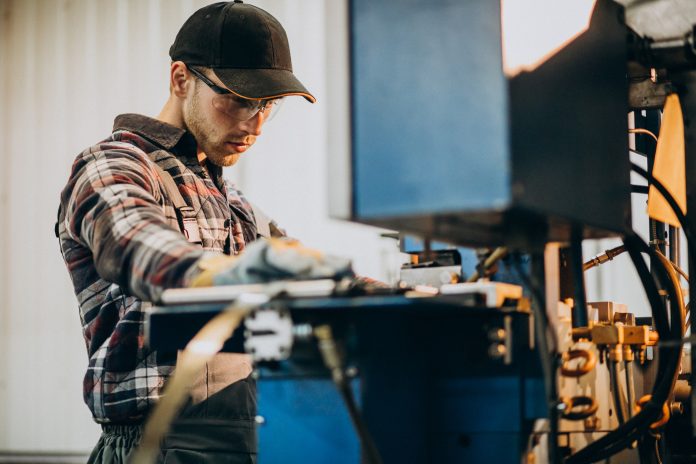

Titanium components require more than just a basic machine shop. They need tight tolerances, expert hands, and equipment that doesn’t blink under pressure. That’s where high-end CNC machining in Alabama steps in—bringing precision, speed, and repeatability to an entirely different level.
Ultra-tight Tolerance Control for Complex Titanium Parts
Precision makes or breaks a titanium part. Whether it’s for aerospace, robotics, or defense, components often need tolerances within thousandths of an inch. CNC machining in Alabama delivers that level of accuracy thanks to computer-controlled motion systems and real-time feedback sensors. This tight tolerance control becomes especially important in applications involving rotating shafts, pressure seals, and fitted enclosures.
For a robotics engineering company in Alabama, hitting these exact specs means their titanium parts operate smoothly without over-engineering or material overuse. Manual techniques can’t consistently deliver these results. But advanced CNC machines track tool paths with sub-micron accuracy, ensuring that from prototype to production, every part functions exactly how it should.
Multiaxis Machining Capability for Intricate Geometries
Titanium doesn’t play nice with basic milling. Complex parts—like multi-sided enclosures or curved heat shields—require machines that can move and cut along several axes at once. That’s where multiaxis CNC machining in Alabama comes in. It’s built for 5-axis or even 9-axis jobs that carve titanium as if it were butter.
This level of motion allows fabricators to reach hidden angles, undercuts, and difficult contours without needing multiple setups. That’s a game changer for a robotics engineering company in Alabama developing tight spaces for internal sensors or actuators. Complex doesn’t mean complicated anymore—just smarter machining.
Smooth Surface Finishes Reducing Post-Machining Work
Surface finish impacts more than looks—it affects part performance, bonding, and even how wear-resistant a component becomes. Titanium has a stubborn nature that can lead to chatter marks or grain pull. Skilled CNC machining in Alabama minimizes that risk by using balanced spindle speeds, precision tooling, and optimized feed rates for titanium’s low thermal conductivity.
The result? Surfaces that are nearly ready to use off the mill. Robotics teams that once spent hours polishing high-friction contact parts can now reduce or even skip post-processing altogether. That’s more time saved and a cleaner, more efficient production pipeline.
Consistent Repeatability Across Production Runs
Consistency is non-negotiable in robotics. Whether it’s ten parts or ten thousand, CNC machining in Alabama provides the same results on every run. That’s thanks to computer-stored G-code, calibrated fixtures, and tool path simulations that leave no detail to chance.
Once a titanium component passes quality inspection, the program doesn’t change unless needed. That means fewer surprises during testing and less time wasted on rework. For a robotics engineering company in Alabama, predictable machining is the foundation of scalable innovation.
Reduced Material Waste Through Precise Milling Paths
Titanium isn’t cheap. So every sliver of scrap shaved off unnecessarily is money out the window. CNC machines that are built for titanium use efficient milling paths designed to remove just what’s needed—nothing more. These tool paths are often generated using CAM software that prioritizes chip load balance and directional cutting.
With this approach, manufacturers cut down on wasted billets and lower their material costs. The byproduct? A more sustainable and cost-effective process that benefits both the engineer and the bottom line. It’s a smart choice for any high-spec robotics application where titanium is the material of choice.
High Spindle Speeds Minimizing Thermal Stress on Titanium
Titanium builds up heat quickly, but it doesn’t release it easily. That’s why cutting it with the wrong spindle speed can warp the part or ruin tooling. High-speed CNC machining in Alabama uses advanced spindle designs that maintain speed while managing heat through smart coolant systems and intermittent cutting cycles.
By keeping the heat at bay, these machines protect the structural integrity of the titanium and extend tool life. Engineers working with high-stress robotics parts, like joint actuators or mount brackets, can trust their components won’t suffer from microfractures or thermal distortion over time.
Efficient One-Setup Machining Cutting Production Time
Swapping parts between fixtures eats time and introduces potential errors. One-setup machining fixes that. With multiaxis CNC systems, an entire titanium part can be machined in one go—start to finish—without moving it to another station. That boosts productivity and simplifies the workflow.
For a robotics engineering company in Alabama, that efficiency translates directly into faster prototype iterations and quicker go-to-market timelines. CNC machining in Alabama isn’t just about precision—it’s about speed and reliability built into every step of the process